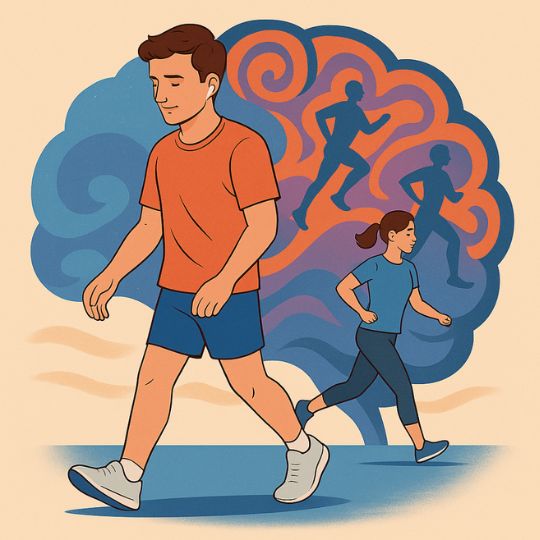
Learning and Movement
Movement boosts cognition by increasing blood flow, neurotransmitters, and neuroplasticity. Physical activity enhances attention, memory, mood.
Learning and movement go hand in hand: even brief exercise boosts blood flow, oxygen and “feel-good” neurotransmitters, sharpening attention and easing stress. Studies show that children learn vocabulary more effectively when pairing words with gestures, and adults build memory when rehearsing material while walking. Neuroscience reveals that movement stimulates neuroplasticity—via BDNF, lactate and hippocampal growth—so regular activity enhances both short- and long-term learning.
Practical strategies include interspersing 20–30-minute study blocks with stretching, squats or brisk walks; using standing desks, exercise bikes or treadmills; and linking concepts to simple movements (e.g., lunges for verb tenses, gestures for vocabulary). Active breaks—like a minute of jumping jacks—recharge concentration, particularly benefiting restless learners, while walking meetings and position changes prevent mental fatigue over longer sessions.
Memory retention deepens through enactment: self-performed actions create richer, multi-modal traces that endure. Exercise before study reduces cortisol and boosts dopamine, fostering motivation and “flow,” while physical rituals (jogging, yoga) break cycles of anxiety. Movement also unleashes creativity—peripatetic philosophers knew it: treadmill or outdoor walks consistently yield more original ideas than sitting.
In sum, integrating movement into learning makes the mind more alert, resilient and inventive. By treating exercise not as a distraction but as an ally—through simple gestures, active pauses or walking reviews—we learn more effectively, sustainably and enjoyably.
- Audience
- Everybody with interest learning better
- Publisher
- BSL